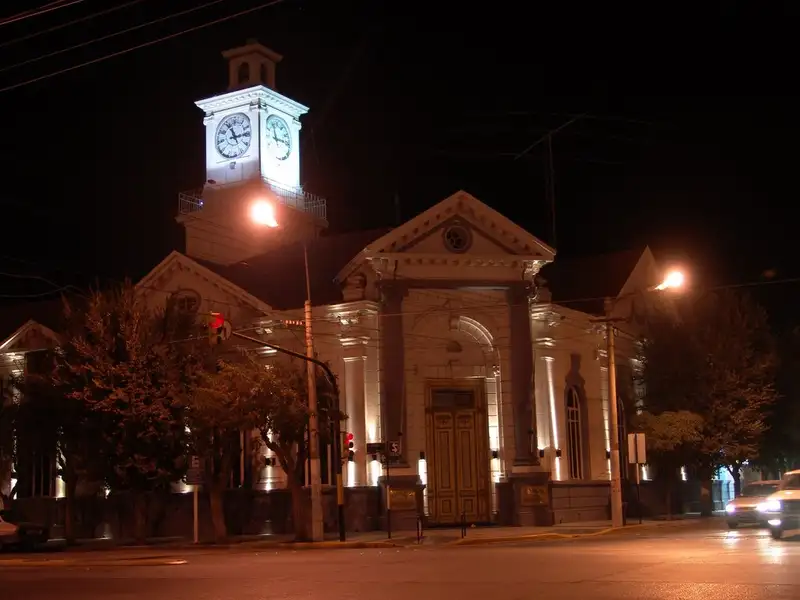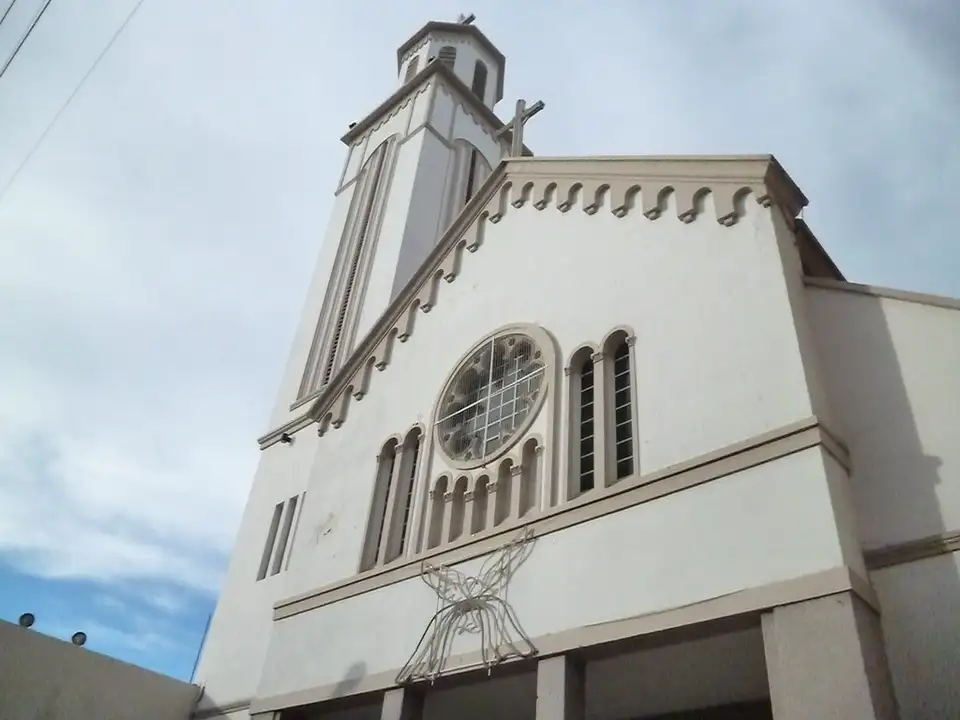
Iglesia María Auxiliadora
Iglesia María Auxiliadora stands as one of the most significant reference points in the urban centre of Trelew. Located in the heart of the Valle Inferior del Río Chubut, this building is not only a place of worship but a physical testament to religious and educational expansion in the Patagonian region. Its importance lies in its capacity to connect the past of the first Salesian missions with the new institutional reality of the area, following its recent designation as the main seat of an autonomous diocese.
Salesian roots and architectural evolution
The history of the site dates to the early twentieth century, when Trelew had a very small population. Around 1905, the presence of Salesian missionaries such as Juan Muzio enabled the establishment of a primitive church and a school closely linked to the community. This process of institutional consolidation continued over the following decades, with the construction of facilities intended for classrooms and dormitories between 1920 and 1923.
The building visitors see today is the result of a later phase of growth. Officially inaugurated on 20 November 1960, this larger church was consecrated by Monseñor Pérez, the first bishop of the Diocese of Comodoro Rivadavia. The current structure presents a synthesis of historical elements and modern features, reflecting the aesthetic typical of mid-twentieth-century architecture in the region.
A moment of institutional transition
Beyond its architectural value, the building is undergoing a moment of historical transformation for the local Catholic community. Following the creation of a new diocese in the department of Rawson, Iglesia María Auxiliadora has ceased to fall under the jurisdiction of Comodoro Rivadavia and has become the main seat of this new ecclesiastical district. This change, backed by the Vatican, positions the church as the nerve centre of religious activity in the valley.
The immediate surroundings of the church — which include educational institutions with a history dating to 1909 — reinforce its character as a cultural and social hub in Trelew. The presence of associated schools and the integration of the community around this geographic point allow the church to be understood not as an isolated monument but as part of an urban fabric where the memory of the first settlers and missionaries remains very much alive.