Museo Argentino de Ciencias Naturales Bernardino Rivadavia
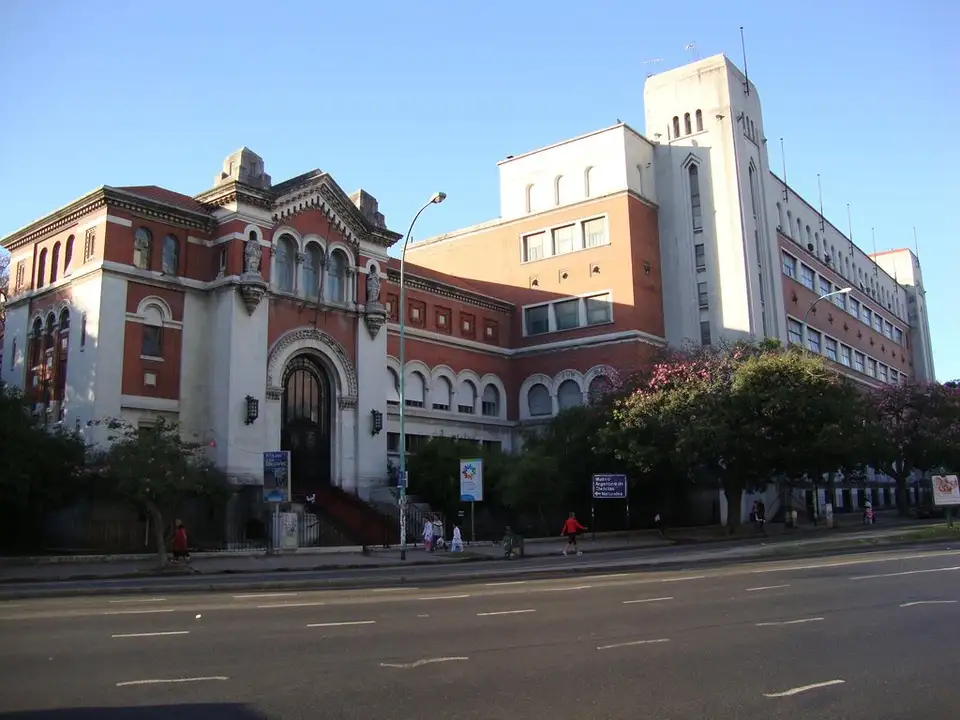
Located to the west of the city, within the broad oval space that forms Parque del Centenario, the Museo Argentino de Ciencias Naturales Bernardino Rivadavia stands as a fundamental pillar for understanding the biodiversity and geological history of the territory. It is not merely a scientific institution; it is a meeting point between academic research and public interest, situated in an area that connects the urban fabric with significant green spaces in the capital.
Heritage and applied science
The museum functions as an essential repository of Argentina’s natural memory. Its relevance lies in its capacity to house collections that document evolutionary processes and environmental changes spanning millions of years. The institution is notable for its work in paleontology, being a space where the study of extinct species — dinosaurs in particular — constitutes one of its most distinctive and recognizable features. This scientific focus means that the pieces on display are not mere objects of observation, but testimonies to the biological evolution of the continent.
The natural history tour
The experience inside the building is organized through a series of rooms that guide visitors through different levels of complexity and subject matter. The route moves from an understanding of the large reptiles that once inhabited the region to the study of present-day fauna and local ecosystems. The arrangement of the exhibitions is designed to convey the scale of life, where the presence of large fossils creates an immediate visual impact. The zoology and botany collections complement this perspective, offering a detailed look at the biological diversity that characterizes Argentina’s natural environment.
Context within Parque del Centenario
Beyond its walls, the museum is fully integrated with its immediate surroundings. Being situated in Parque del Centenario, it forms part of a cultural and recreational hub that invites unhurried exploration. This location allows a scientific visit to be complemented by time spent in the park’s open spaces, establishing the museum as a key component of the neighborhood’s identity. The relationship between the institution and its physical setting reinforces its character as a public space devoted to knowledge and the preservation of natural heritage.