King Fahd Islamic Cultural Center
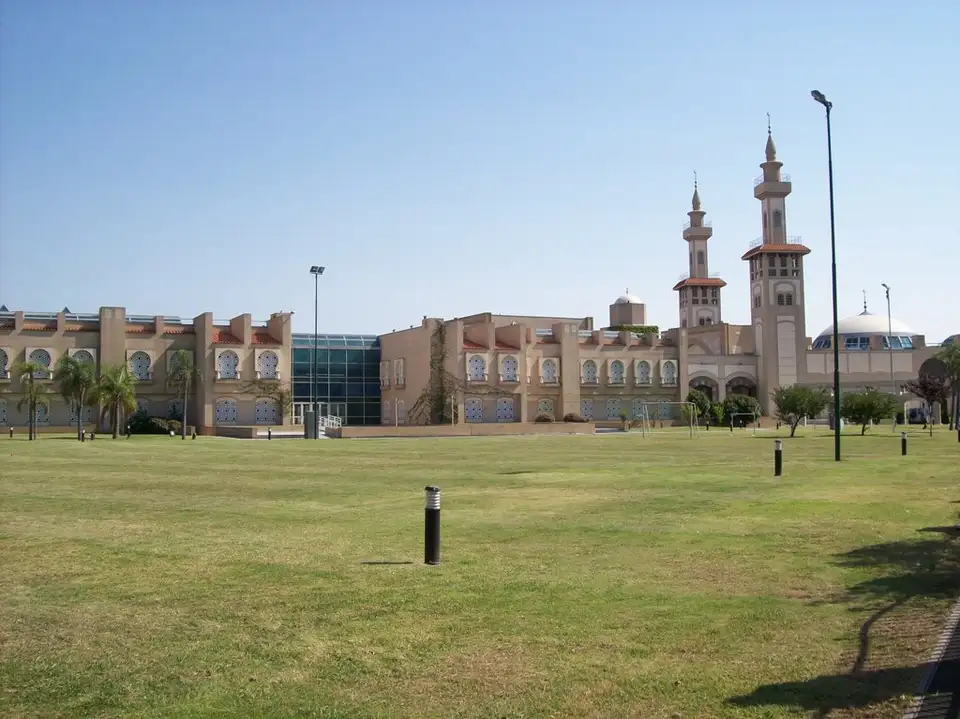
Located in the heart of the Palermo neighborhood, on Avenida Intendente Bullrich, the King Fahd Islamic Cultural Center stands as a key gathering point for the promotion of Arab culture and Islamic affairs in Argentina. Inaugurated in 2000, this complex is not only a place of worship — it also holds the distinction of being the largest mosque in all of Latin America, surpassing other regionally significant temples, including the one in Caracas. Its presence in Buenos Aires marks a milestone in the city’s cultural diversity, functioning as a bridge between the traditions of the Arab world and the local Buenos Aires context.
Architecture and cultural purpose
The building, also known by its full name as the Custodian of the Two Holy Mosques King Fahd, stands out for its scale and multifaceted function. Beyond its religious character, the complex was designed to integrate diverse dimensions of knowledge and coexistence. The architectural ensemble houses a mosque, a museum, a library, and a cultural center, allowing the space to transcend prayer and become a hub of learning and heritage preservation. The structure itself serves as a testament to the significance of the Islamic community in the region and its commitment to bicultural education.
The center’s offering extends into academic formation through the Colegio Rey Fahd, an educational institution covering levels from kindergarten through formal schooling, promoting an education that combines religious values with a bicultural perspective. This pedagogical dimension reinforces the center’s role as a space of permanence and growth for families, consolidating its identity not only as an architectural monument but as a living organism within the urban fabric of Palermo.
A journey through knowledge and memory
Moving through this complex means entering an environment dedicated to the preservation of memory and the promotion of art. The presence of a museum and a library gives visitors contact with elements of Arab craftsmanship and history, offering an informative and respectful look at its traditions. The space is designed for those seeking to approach these roots from an educational perspective, making cultural heritage accessible to the general public.
The center’s connection to its immediate surroundings in Palermo is essential. Situated in an area of considerable cultural and residential activity, the complex integrates into the city’s fabric as a space of calm and reflection, but also of constant intellectual engagement. Its significance lies in that capacity to offer a fragment of another culture within everyday Buenos Aires life, allowing diversity to form part of the urban landscape of the city.